Why Kettlebell Training Works So Well for Busy Adults
If you're over 35, juggling work, family, and everything else life throws at you, finding time to exercise can feel like another job on the to-do list. Many people start with good intentions, only to abandon complex workout plans that demand hours in the gym each week.
The good news? Effective training doesn't have to be complicated or time-consuming.
Kettlebell training has become increasingly popular because it delivers a full-body workout in a relatively short amount of time. Whether you're exercising in your living room before work or fitting in a session after the kids are in bed, a single kettlebell can help you build strength, improve mobility, boost cardiovascular fitness and develop resilience, all without needing a room full of equipment.
At Move Strong London, we've found that combining kettlebell training with movement and functional breathwork creates an approach that fits real life. Rather than chasing fitness trends, it focuses on helping busy adults move well, feel stronger and stay active for the long term.
Why Time Efficiency Matters More Than Ever
One of the biggest barriers to regular exercise isn't motivation; it's time.
Research from the World Health Organisation continues to show that adults benefit from at least 150 minutes of moderate physical activity each week alongside strength training on two or more days. Yet many people struggle to meet these recommendations because traditional gym routines often feel too long or complicated.
The beauty of kettlebells is that every exercise recruits multiple muscle groups at once. Instead of isolating one muscle at a time, movements involve your entire body.
That means you can accomplish more in 20-30 minutes than you might during a much longer conventional workout.
For busy professionals and parents, that's often the difference between training consistently and not training at all.
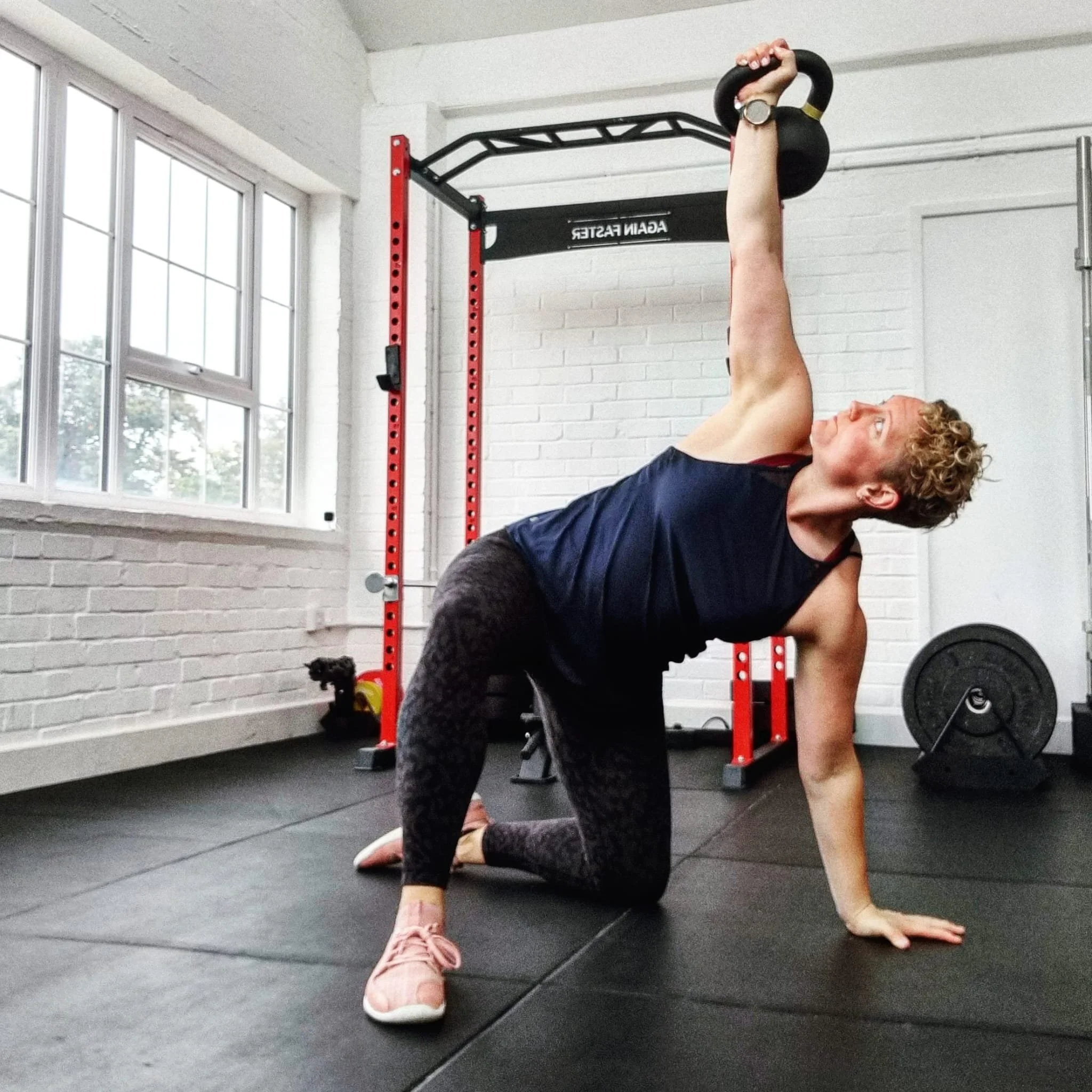
A photo of someone performing a kettlebell swing in a bright workout space.
One Piece of Equipment, Endless Possibilities
Unlike machines that perform a single function, a kettlebell can be used for hundreds of movements.
A simple workout might include:
| Exercise | Main Benefits |
|---|---|
| Swings | Power, conditioning and posterior chain strength |
| Goblet Squats | Lower body strength and mobility |
| Presses | Shoulder stability and upper body strength |
| Carries | Core strength, posture and grip |
| Turkish Get-Ups | Full-body coordination and mobility |
With just one or two kettlebells, you can train strength, endurance, balance, coordination and cardiovascular fitness.
That makes kettlebells particularly well-suited to home workouts where space and equipment are limited.
Functional Strength That Transfers to Everyday Life
Many traditional gym programmes isolate muscles.
There's nothing inherently wrong with that, but life rarely asks us to use one muscle at a time.
Picking up shopping.
Carrying children.
Getting off the floor.
Climbing stairs.
Lifting luggage.
These activities require your body to function as a single, connected system.
Kettlebell exercises naturally train movement patterns rather than individual muscles. This develops strength that carries over into everyday activities while improving coordination and body awareness.
The goal isn't simply stronger muscles.
It's becoming more capable in everyday life.
Better Mobility While Building Strength
Many people assume they need separate mobility sessions alongside strength training.
Well-designed kettlebell programmes often combine both.
Exercises move joints through large ranges of motion while requiring stability and control. This combination can help maintain healthy movement without spending another hour stretching.
As we age, maintaining mobility becomes increasingly important for independence, injury prevention and overall quality of life.
Rather than treating mobility as an afterthought, kettlebell training builds it into the workout itself.
Breath Is More Than Relaxation
Breathwork is often associated with meditation or stress relief.
While it certainly helps calm the nervous system, that's only part of the picture.
Your breathing influences:
Core stability
Posture
Movement quality
Strength production
Recovery
Athletic performance
Research has shown that proper breathing mechanics contribute to spinal stability and efficient movement patterns.
At Move Strong London, breath training isn't separate from strength training; it's integrated into it. Learning when to brace, when to breathe and how to recover between efforts helps people move more efficiently while reducing unnecessary tension.
For many clients, this becomes one of the biggest missing pieces in their training.
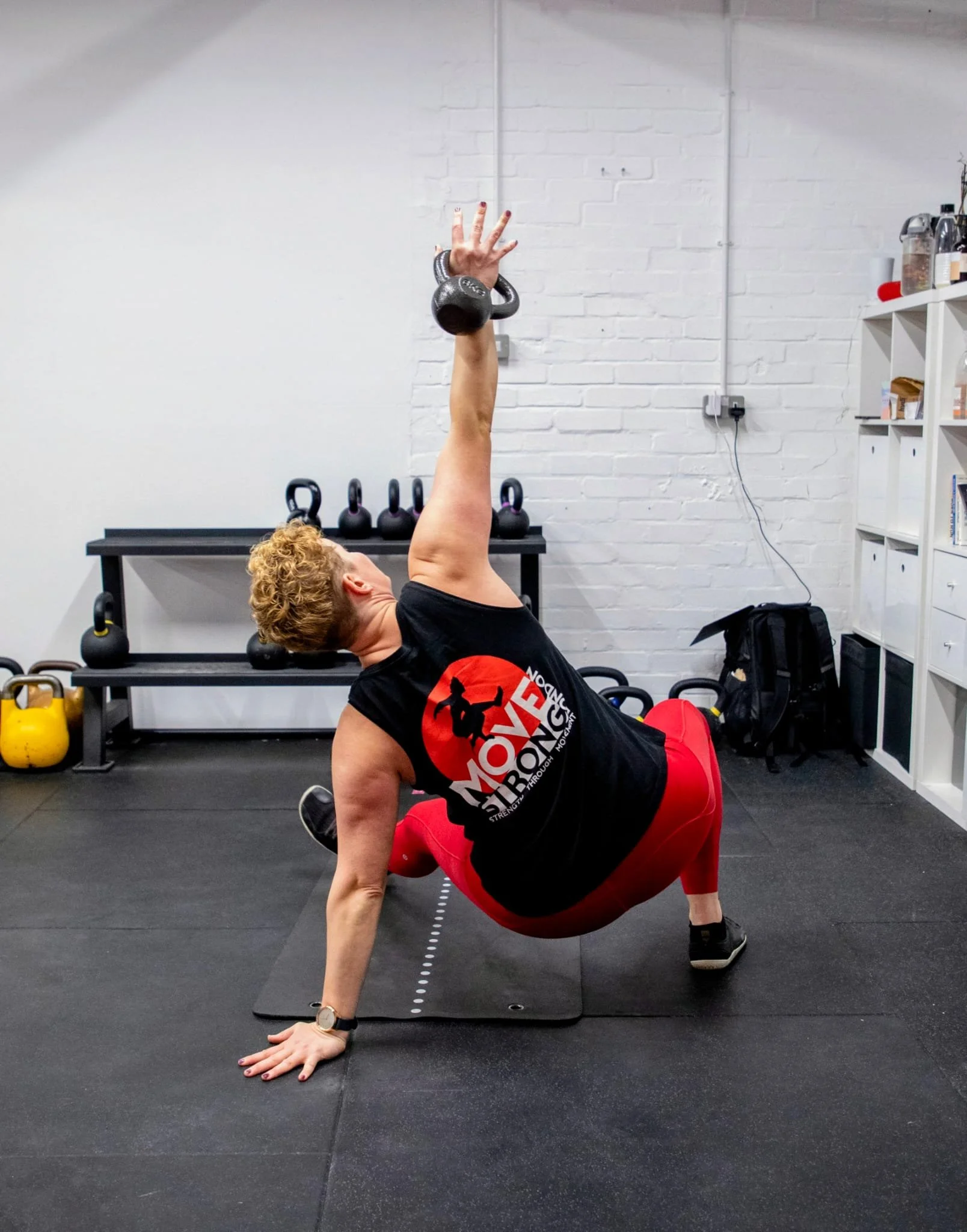
Person performing a kettlebell floor exercise in a gym, holding one kettlebell overhead while rotating through the movement.
Train Movement, Not Just Muscles
Modern lifestyles leave many of us sitting for long periods.
Over time, we become stiff, disconnected from how our bodies move and less confident performing everyday physical tasks.
Movement practice aims to restore that.
Rather than focusing solely on isolated exercises, it encourages the body to move through multiple planes of motion.
This develops:
Better balance
Greater coordination
Joint resilience
Body awareness
Natural athleticism
Whether that's through kettlebell flows, crawling patterns or animal flow-inspired movement, the objective is to reconnect the brain and body.
It's an exercise that feels practical rather than repetitive.
Consistency Beats Perfection
One lesson we've learned is that generic training plans don't work for everyone.
Life changes.
Energy levels fluctuate.
Work becomes busy.
Parents lose sleep.
Hormonal changes, including perimenopause, can affect recovery and performance.
Rather than forcing yourself through the same workout every day regardless of how you feel, sustainable training adapts while still providing structure.
That's why personalised programming can be so valuable.
The aim isn't to chase perfect workouts.
It's to build consistency over months and years.
Small sessions completed regularly almost always outperform ambitious programmes that are impossible to maintain.
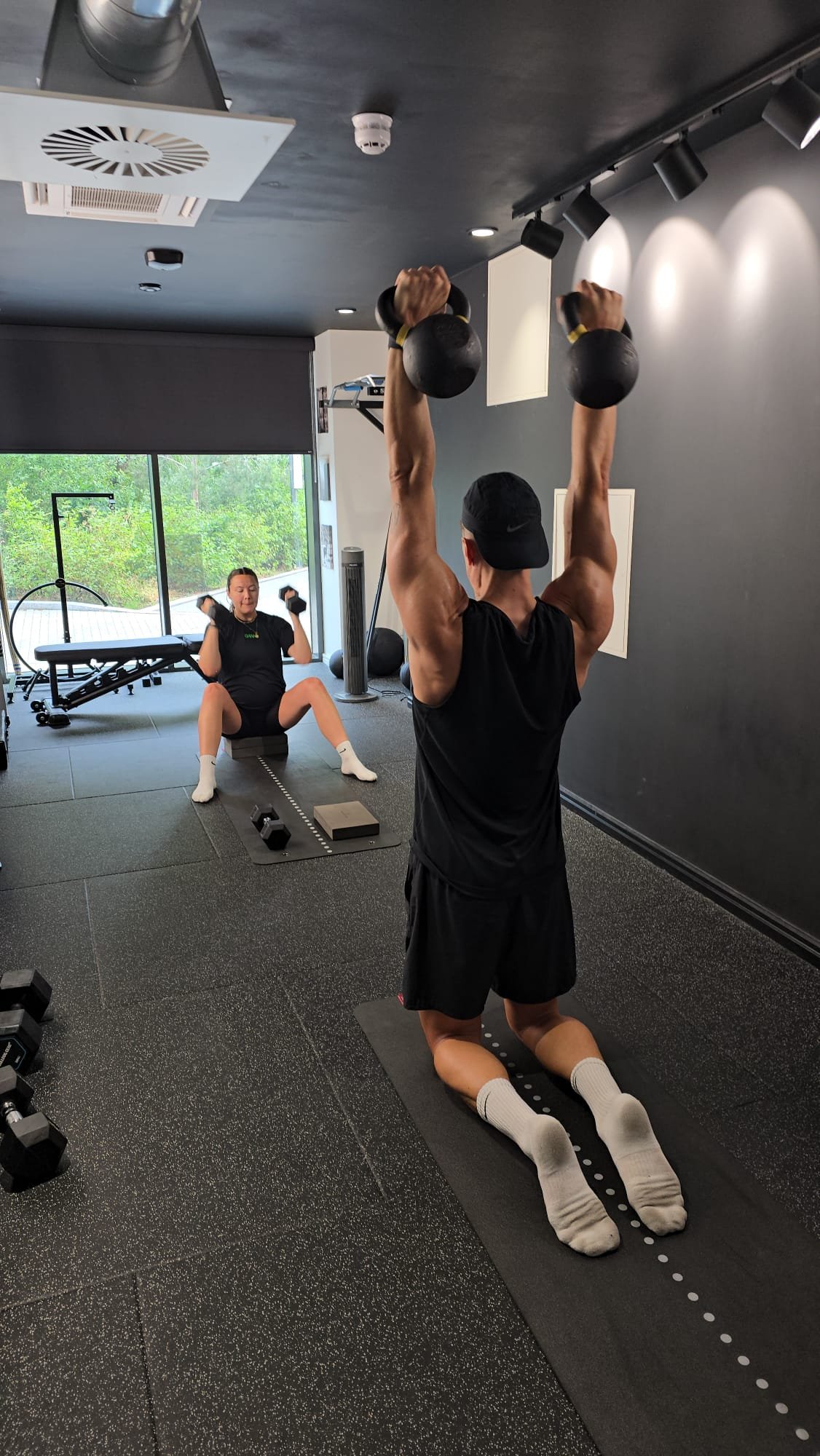
Two people exercising on mats in a gym, pressing kettlebells overhead during a strength training session.
Why It Works So Well for Adults Over 35
As priorities shift, most people aren't training for aesthetics or spending two hours a day in the gym.
They're training to:
Stay strong as they age
Reduce stiffness
Improve energy
Support long-term health
Keep up with children and grandchildren
Continue enjoying activities they love
Kettlebell training supports these goals by developing multiple physical qualities simultaneously.
Instead of needing separate sessions for strength, cardio, mobility, and balance, a single intelligently designed workout can cover them all.
That's a practical approach for people with demanding lives.
Build Strength That Fits Your Life
The best workout isn't the most complicated one.
It's the one you'll continue doing.
Kettlebell training offers an efficient, functional and adaptable way to build strength, improve movement and support long-term health without requiring hours in the gym.
When combined with movement practice and functional breathwork, it becomes more than just exercise. It becomes a sustainable system that helps you move well, recover better and stay capable through every stage of life.
If you're looking for expert coaching, personalised online programming, live online classes or on-demand kettlebell and breathwork sessions, visit www.movestronglondon.co.uk to discover how Move Strong London can help you build lasting strength that fits around your life, not the other way round.