How to Build an Effective Workout When You're Short on Time
If you're juggling work, family, appointments and everything else life throws at you, finding an hour to exercise can feel unrealistic. For many people over 35, especially working parents, the challenge isn't motivation; it's time.
The good news is that you don't need marathon gym sessions to become stronger, move better or improve your health. The key is making every minute count.
At Move Strong London, we believe training should fit around your life rather than becoming another source of stress. Whether you have 20 minutes at home before work or half an hour during lunch, a well-designed workout can build strength, improve mobility and support long-term health.
Why Short Workouts Can Be Surprisingly Effective
Many people still believe that longer workouts automatically produce better results. Research suggests otherwise.
The World Health Organisation recommends that adults accumulate at least 150 minutes of moderate activity or 75 minutes of vigorous activity each week, but this does not have to be done in long sessions. Exercise accumulated throughout the week provides meaningful health benefits.
Likewise, studies published in the British Journal of Sports Medicine have shown that even short bouts of vigorous movement can improve cardiovascular fitness and overall health when performed consistently.
The biggest advantage?
A 25-minute workout you complete three or four times every week will almost always outperform the perfect one-hour programme you rarely have time to do.
Consistency beats perfection.
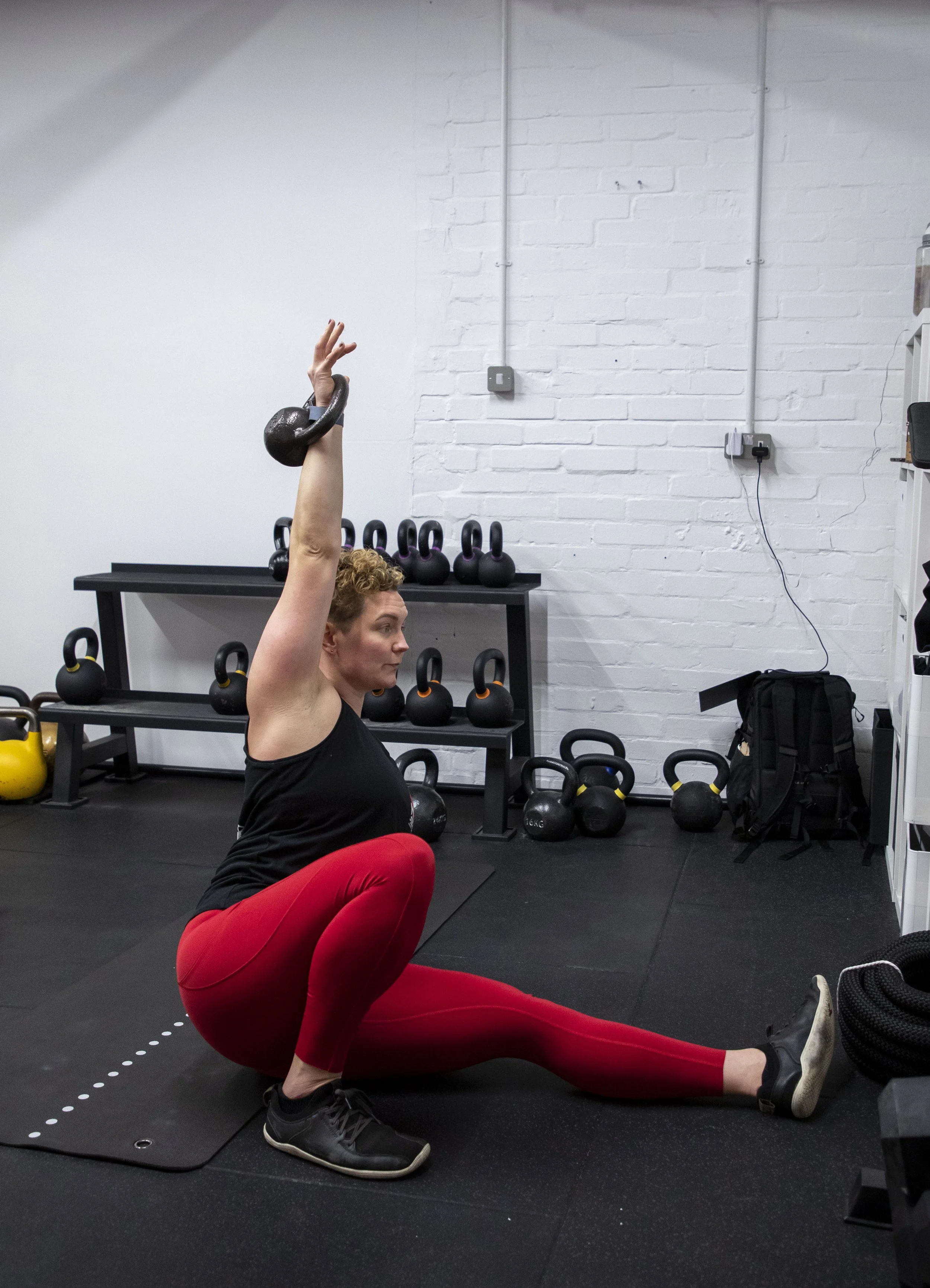
Person performing a kettlebell floor exercise in a gym.
Start With One Clear Goal
One of the biggest mistakes people make is trying to squeeze every fitness component into a single session.
Instead, ask yourself:
Do I want to build strength?
Improve conditioning?
Increase mobility?
Reduce stress?
Feel more energised?
Your workout becomes much easier to structure once you know its primary purpose. It's also possible to cover several elements within one workout, and that's where the real beauty of kettlebell training comes in.
For example:
| Goal | Main Focus |
|---|---|
| Strength | Heavy kettlebell lifts with longer rests |
| Conditioning | Short circuits with controlled intensity |
| Mobility | Flow-based movement and controlled positions |
| Recovery | Breathwork and gentle movement |
| Athletic performance | Strength combined with movement patterns |
Trying to achieve everything often means achieving very little.
The Four-Part Structure That Works
When time is limited, simplicity wins.
A complete session can follow four straightforward phases.
1. Prepare (3–5 Minutes)
Instead of static stretching, spend a few minutes preparing your joints and nervous system.
Include movements such as:
Hip rotations
Thoracic spine mobility
Shoulder circles
Deep squats
Controlled breathing
This improves movement quality and helps your body transition from sitting at a desk to moving well.
2. Build Strength (10–15 Minutes)
Choose just one or two major movement patterns.
For example:
Kettlebell swings
Goblet squats
Single-arm presses
Rows
Deadlifts
3. Conditioning (5 minutes)
An efficient finisher can make all the difference. A favourite of mine is this simple swing protocol:
10 single arm swings every 30 seconds (alternating right and left)
Totalling 100 swings, this is a nice challenge! The weight you work with should enable you to recover just enough after each set and before going again.
4. Down regulation (3 minutes)
When we are short on time, it's easy to skip this part. However, mindfully down regulating through targeted breathwork at the end of the session will leave you feeling calm, yet energised and ready to jump back into your day.
My favourite position for this is the 90/90:
Rather than constantly changing exercises, repeat quality movements consistently over several weeks. Progress comes from gradually improving technique, control or load, not constantly chasing variety.
Why Kettlebells Work So Well
Kettlebells are particularly effective for people with limited time because they combine several training qualities into one piece of equipment.
They allow you to:
Train the whole body
Build strength and power
Improve balance
Develop coordination
Raise your heart rate
Enhance mobility
Unlike many gym machines that isolate individual muscles, kettlebells encourage the body to work as an integrated system.
That's one reason they fit so naturally with functional movement training.
Personally, I've trained for a strongwoman competition using primarily kettlebells. That experience reinforced something I already believed: you don't always need more equipment. Often, you simply need better programming.
Add Movement, Not Just Muscles
Modern lifestyles encourage us to sit for long periods before jumping into isolated gym exercises.
The body wasn't designed for that.
Movement practice develops coordination, balance and the ability for different parts of the body to work together.
This might include:
Animal Flow
Crawling patterns
Rotational movements
Ground transitions
Balance work
Think of it as training your body's operating system rather than individual muscles.
The benefits often extend well beyond the gym.
You may find it easier to:
Play with your children
Get up from the floor
Carry shopping
Improve posture
Reduce stiffness
Feel more athletic in everyday life
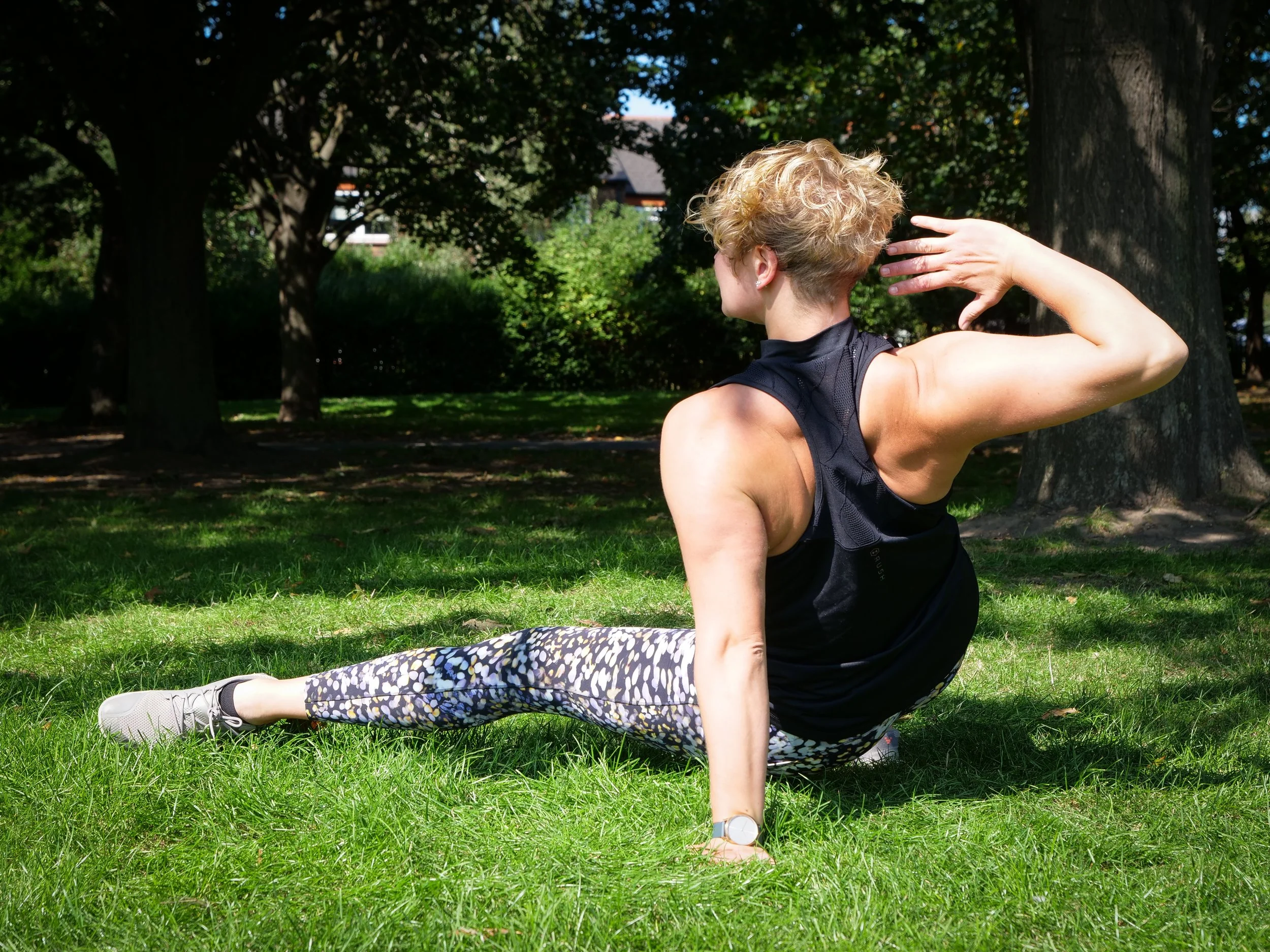
Athlete performing Animal Flow movements outside on grass.
Don't Skip Your Breathing
Breathwork is often associated with meditation or relaxation.
While those benefits are valuable, breathing also influences movement quality, posture and performance.
Efficient breathing helps create stability throughout the torso while supporting mobility through the ribs, spine and shoulders.
Research published in the Journal of Strength and Conditioning Research suggests breathing mechanics can influence lifting performance, trunk stability and movement efficiency.
At Move Strong London, breath training isn't treated as an optional extra.
It's woven throughout training because better breathing supports:
Better posture
Improved mobility
Stronger lifting mechanics
Stress management
Recovery between sessions
Greater body awareness
Sometimes, improving how you breathe can improve how you move.
Finish With Something That Leaves You Feeling Better
Not every workout needs to end in exhaustion.
A few minutes of slower breathing or gentle mobility can help shift your nervous system towards recovery.
This often means:
Less tension
Better recovery
Improved sleep
Feeling energised instead of depleted
For busy professionals, that may be far more valuable than collapsing on the floor after another punishing circuit.
Keep the Basics First
The fitness industry constantly promotes the newest supplement, training method or recovery gadget.
Most people don't need another shortcut.
They need consistency with the fundamentals.
Focus on:
Daily movement
Quality sleep
Adequate hydration
Plenty of vegetables and fruit
Enough protein
Regular strength training
Managing stress
Good breathing habits
Master these before worrying about the latest trend.
They continue to produce results year after year.
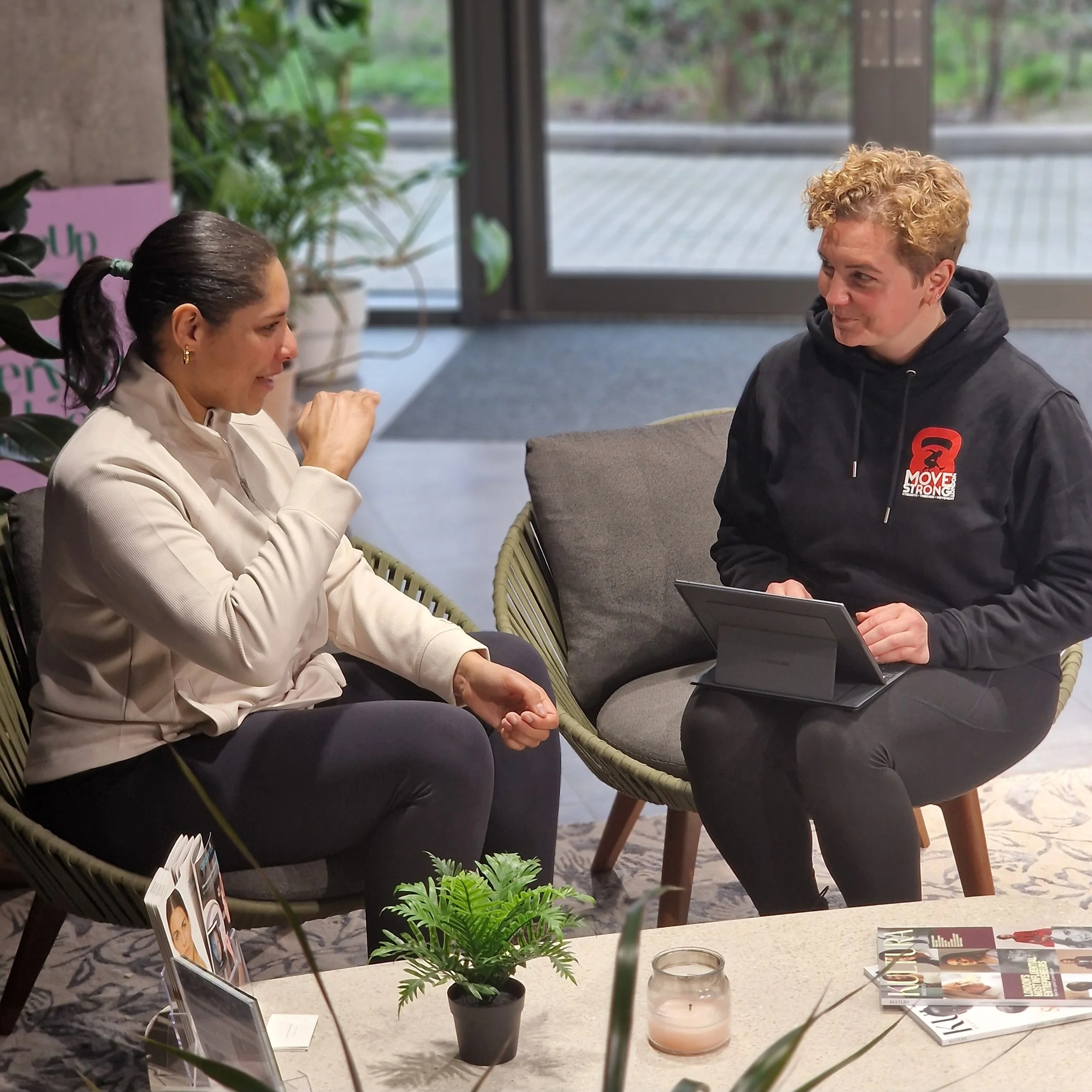
A fitness coach is speaking with a client in a comfortable lounge area while holding a tablet during a wellness consultation.
A Flexible Approach Works Better Than Perfect Plans
One lesson I've learnt through my own training is that rigid programmes don't always fit real life.
Managing my own health has taught me to balance structure with flexibility. Some days are ideal for heavy strength work. Other days call for movement practice, breathwork or a shorter session.
That isn't lowering standards.
It's creating a sustainable system that allows consistent training despite changing energy levels and life's demands. For many busy adults, that's exactly what's missing. The goal isn't to complete the perfect workout every day.
It's to keep showing up.
Train Smarter, Not Longer
If you're short on time, don't assume meaningful training is out of reach.
A focused session built around purposeful movement, strength work and quality breathing can deliver far more value than an hour of unfocused exercise.
Whether you're training at home with a kettlebell or joining an online session, consistency and intelligent programming will always outperform complexity.
Ready to Build Strength Around Your Busy Life?
At Move Strong London, we help busy adults build practical strength through kettlebell training, movement practice, functional breathwork and personalised online coaching.
Whether you're looking for live online classes, on-demand sessions or individual programming, we'll help you create a training approach that fits your lifestyle, not the other way around.
Explore the online coaching options at www.movestronglondon.co.uk and discover how effective training can be, even when time is limited.